The amount of water in the litter is its moisture content. Dry matter content is the percent weight of the litter when all water has been driven off. There is no meter for measuring litter moisture. The ones used for forage, soil or wood will not work reliably with litter. Moisture and dry matter content of poultry litter can be determined through litter moisture analysis. Once you find one, the other will be easy to calculate. The analysis can be done as follows:
1. Collect Litter Sample: The objective of litter sampling is to obtain a small sample of litter that represents the whole litter in the house. You’ll have to collect a huge sample of litter from different locations in the poultry house, mix them thoroughly and then take a small sample from the huge sample for test. The 2 methods that can be used in litter sampling are
>>>>>> [Read more…] <<<<<<
Egg sizes can be generally classified into small, medium, large and extra-large. Among these, the ones we desire are medium and large egg sizes. Extra-large eggs are bad for the birds and we don’t want small eggs.
Commercial hybrid layers can lay 250-310 eggs in one year, but if you’re not careful, most of these eggs will be of small sizes. This is not only a problem when you sell your eggs, it is also a problem when they’re meant for family consumption. Who want to be getting only small eggs?
Discover how to prevent your birds from laying lots of small eggs Discover how to increase egg production by 20-30%. Are your birds laying small eggs and you want the size increased? Do large eggs fetch more money in your area?
To discover these, download and read this ebook.
Or
>>>>>> [Read more…] <<<<<<
Do you know that herbs have the capability to replace antibiotics? This will be possible if our scientists step up their research on herbs. Right now, there are lots of proven and promising researches that show that herbs and plant extracts can be used to prevent and treat diseases in farm animals. They can also be used to promote growth and lower mortality.
The good thing about herbs is that they can be used without the risk of creating the dreadful antibiotic resistance in man and farm animals.
The ebook you’re about to download contains a lot of herbal and plant extracts for chickens. You can make them in your home and benefit from the health-giving and growth-promoting power of herbs. The ebook contains:
Various herbs and plant extracts that have been used to prevent diseases Herbs and plant extracts that can be used to promote growth in broilers Herbs
>>>>>> [Read more…] <<<<<<
Feed consumption plan can help you estimate how much feed your birds will need at each stage (Chick, grower and laying). This will help you estimate feed cost before beforehand. The feed plan below is base on commercial brown egg layers that are reared intensively (i.e. they’re reared in an enclosed building and provided with feed and water daily. They’re not allowed to free-range). Obviously, you mustn’t follow this plan exactly as it is, you can make adjustments according to your own unique conditions.
Chick Starter: This is usually fed for the first 8-9 weeks. Switch to grower only when the body weight target have been achieved (i.e. about 720g from the chart below).
Grower Diet: This is usually fed from 8-9 weeks until 5% of the birds start laying. This can be at 20 weeks (more or less).
Layers Diet: A switch is made from grower to layers diet
>>>>>> [Read more…] <<<<<<
Broilers were selected to grow fast. Before you can tap into their full potential, it is very important that you keep their environment clean. One major way to achieve this is by keeping the litter in good condition.
Litter consists of droppings and bedding materials. You should ensure that the litter is always in a dry and loose form (25-35% moisture content). Wet litter occurs when the moisture content in the litter is high. This can cause the litter to cake up and trap water in it. Wet litter is common around drinkers and under leaky roofs. Below are few consequences of wet litter.
To assess the moisture level in the litter, squeeze a handful. If it forms a cake, the moisture level is too high. If it crumbles into fine dust, the moisture level is too low and the litter will be dusty. When the moisture level is optimum,
>>>>>> [Read more…] <<<<<<
If you buy egg layers as day old chicks, it will take about 4-5 months before they start laying eggs. During this period when they are unproductive, they’ll just be consuming feed without putting some money in your pocket or eggs on your table. The only gain you might get is from the sales of feed bags or manure. From day old to 5 months time, one layer can consume about 9.3kg of feed. So you can estimate feed cost from that. There are other costs such as vaccination, transportation, electricity, drugs etc. The fact is that you’ll be spending money.
Now what if after you’ve spent so much money and those young birds finally start laying eggs and they suddenly start getting sick? You may have some pullets (young egg layers) that are doing great, but once they start laying you notice that diseases started coming up and mortality
>>>>>> [Read more…] <<<<<<
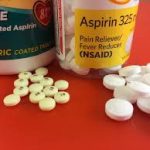
Aspirin is a salicylate and a nonsteroidal anti-inflammatory drug (NSAID). It is taken by humans to prevent heart attacks and stroke. It is also used to reduce fever and relieve mild to moderate pain from conditions such as muscle aches, toothaches, common cold, and headaches. It may also be used to reduce pain and swelling in conditions such as arthritis. But do you know that plants can also benefit from aspirin? Scientists have found out that aspirin can help plants to:
1. fight off diseases (fungal, bacterial and viral)
2. tolerate stress conditions (salty soils, high temperature, drought, cold) [1] and
3. improve plant growth.
Aspirin contains Acetyl Salicylic Acid (ASA), which can change to salicylic acid (SA) when it dissolves in water. Salicylic acid is present in fruits and vegetables, with more in herbs and spices. Interestingly, scientists have also discovered that aspirin and a diet rich in fruits
>>>>>> [Read more…] <<<<<<
Feed conversion ratio (FCR) is a measure of how efficient an animal converts feed mass to desired output. The desired output may be eggs for laying birds, milk for dairy cows and goat, meat for meat animals such as broilers, pigs, rabbits etc, wool for animals like sheep, goats, rabbits etc. FCR is the mass of feed eaten divided by the output over a given period of time.
FCR = Feed Eaten/Output
Farmers desire a low FCR because it means that more output is produced with less feed. Therefore a low FCR means lower feed cost. A FCR of 2 means that to produce 1kg output (live weight gain, milk), the animal will consume 2kg of feed.
Factors Affecting FCR Genetics: Some animals have the natural ability to produce more output from less feed than other animals of the same species. For example, dairy goat breeds can produce much more
>>>>>> [Read more…] <<<<<<
Result of pecking
Within a flock, chickens have a ranking order known as pecking order. To establish this order, there would be mild pecking and this is very normal. But when they start injuring each other, pulling out and eating feathers, and trying to kill and eat each other (cannibalism), it becomes a serious problem. Below are some tips that will help you prevent and control cannibalism and excessive pecking. These bad behaviours can spread like wild fire if not checked.
Ensure that the flock is uniform in colour, breed, age, size and health status. Any chicken that is different in any of these characteristics can become a victim of pecking. Separate such bird to discourage the bad behaviour from starting or continuing. External parasites can cause excessive pecking, so check if it exists and treat accordingly. Avoid exposure to bright light. Red light can reduce pecking. Never
>>>>>> [Read more…] <<<<<<
Antibiotic resistance occurs when bacteria become resistant to an antibiotic. Before the coming of synthetic antibiotics, animal diseases were treated mainly with herbs and plant extracts. However, the trend seems to be going back to the use of herbs and plant extracts in place of synthetic antibiotics.
Causes & Effects of Antibiotic Resistance
Antibiotic resistance usually occurs when humans or farm animals are exposed to low dosage of antibiotics. In the US, farm animals account for about 74% of antibiotics use. Majority of these are not used for treatment, but to enhance growth, prevent diseases and compensate for unsanitary conditions in overcrowded farms. This is accomplished by giving the animals low dosage of antibiotics. When human bacteria are constantly exposed to low dosage of antibiotics, they soon develop resistance/immunity to them. These bacteria will also pass this resistance to their future generations. Humans can become infected with antibiotic-resistant bacteria in
>>>>>> [Read more…] <<<<<<
|
Join the Forum Do you want to discover more great info like these?
Register for free and ask your question in our farming forum! Our knowledgeable members will have your questions answered.
FarmersJoint.com strives to maintain accurate and up-to-date information; however, mistakes do happen and we won't be held accountable for anything that result from the use of information provided in this site. If you would like to correct or update any of the information, please send us an e-mail. THANK YOU!
|
