Egg eating is a frustrating habit that can spread quickly among layers once it begins. Fortunately, there are proven steps farmers can take to prevent or stop this problem.
1. Reduce Stress and Overcrowding
a. Overcrowding increases stress, aggression, and egg pecking. b. Provide at least 1.5–2 square feet of floor space per bird to keep them comfortable.
2. Feed Them Properly
a. Nutrient deficiencies, especially calcium, often trigger egg eating. b. A laying hen needs about 4–4.5 g of calcium daily. c. Provide calcium sources such as limestone, dicalcium phosphate, crushed/burnt oyster shells, snail shells, or egg shells in a separate feeder. d. Ensure hens receive adequate Vitamin D, which aids calcium absorption. e. Include bone meal in rations to supply both calcium and phosphorus for stronger shells. f. Avoid underfeeding — each layer needs about 110–120 g of balanced feed daily.
Read: Feed Consumption
>>>>>> [Read more…] <<<<<<
Do you know you don’t need farmland to start a profitable food business?
1. Just buy fresh vegetables, fruits, or even meat from farmers…
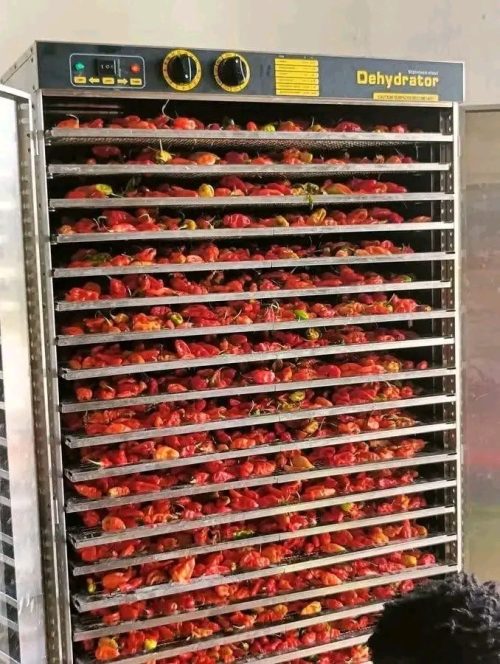
2. Dry them with a dehydrator (or even solar dryer)…
Food dehydrator
3. Package them neatly as dried foods or powders (tomato powder, pepper powder, onion flakes, fruit snacks, etc.). You’ll need a grinder for powdered products…
And boom 💥, you’ve added value, reduced waste, and created a money-printing business that has:
1. Longer shelf-life (6–12 months)
2. Huge demand from households, restaurants, and even export buyers
3. Low entry cost — start small, scale big
4. Optional NAFDAC approval for supermarkets & exports. You can start without NAFDAC and sell in local markets and restaurants.
This is one business that fights food spoilage in Africa AND pays you well if you stick with it.
Do your market research, pick one product, and
>>>>>> [Read more…] <<<<<<
God has truly blessed our country and continent.
Did you know that Nigeria is the largest producer of ginger in Africa and the second largest in the world after India? Every year, Nigeria produces around 500,000–700,000 metric tons, while India leads with 1.8–2 million tons.
Ginger powder satchet
But here’s the real advantage: Nigerian ginger is rated among the best in the world for its strong aroma and high oil content. That means global buyers are hungry for what we grow.
Unfortunately, most of our ginger leaves the country in dried, raw form. We sell it cheap, while others abroad process it into high-value products and make the real profit.
Here’s the truth: a ton of dried ginger sells for about ₦12–13.5 million, but when you process it into ginger powder, oil, tea, candy, or extracts, the value multiplies several times over. That’s the power of value
>>>>>> [Read more…] <<<<<<
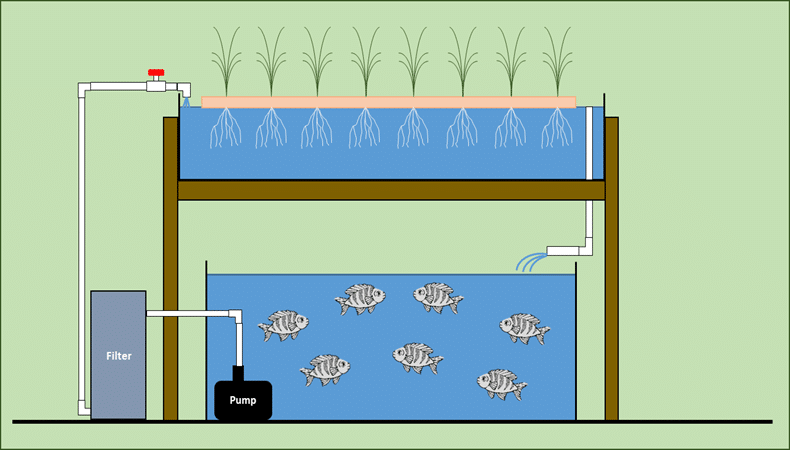
Have you heard of aquaponics before? It is a modern farming system that combines fish farming (aquaculture) with growing crops without soil (hydroponics). In simple terms, you raise fish in a tank and use their waste as fertilizer for plants. The plants, in return, clean the water, which goes back to the fish.
This creates a natural cycle where both the fish and crops benefit each other.
How It Works
Fish Tank: You keep fish like catfish or tilapia in water.
Fish Waste: As the fish eat and grow, they produce waste in the water.
Grow Beds: The water carrying the waste is pumped into grow beds where crops are planted in gravel or other media.
Bacteria Action: Helpful bacteria change the fish waste into nutrients that plants can use.
Clean Water: The plants absorb the nutrients, and the clean water flows back to the fish tank.
This
>>>>>> [Read more…] <<<<<<

Soybeans hull is a good energy source for ruminants. It can replace or supplement other more expensive energy sources like maize, millet etc. Below are some important facts about soyhulls:
1. Depending upon price and availability, soybeans hull can replace some (most or all) of the hay or grain in the diets of sheep, goats, and other livestock.
2. It is very good to feed soyhulls to ruminants that are consuming low to moderate quality forages. It will help boost their growth rate by as much as 80%.
3. for small ruminants (sheep and goats), there are two primary uses of soyhulls:
i. as an energy supplement for animals consuming low to moderate quality forage. This is the most common use for soyhulls. In this case it can replace corn as an energy source on a one-to-one basis (1kg corn can be replaced by 1kg soyhull).
>>>>>> [Read more…] <<<<<<

How do you tackle a cucumber seedlings that is dark green, has thick leaves and stems that easily break? That’s a classic sign of excess nitrogen, often caused by using fresh, uncomposted manure.
What happens when there’s too much nitrogen?
1. Plants grow slowly
2. Leaves yellow at the edges (a sign of potassium deficiency)
3. Stems become brittle and break easily
4. Yields drop significantly if not corrected
How I Fix Excess Nitrogen in Cucumber Plants
I follow 5 key steps to bring my plants back to life:
1. Remove leaves covering the growing tip If the head is blocked by large leaves, the plant won’t grow properly. Cut them off to free up light and airflow.
2. Prune side shoots and flowers This helps redirect energy to the main vine’s growth, especially in early stages.
3. Spray foliar fertilizer with micronutrients I use a foliar mix that contains
>>>>>> [Read more…] <<<<<<

Do you have pregnant sheep, goats or cows that fall sick before or after delivery? Saliva drips out of their mouth, they stop defecating or urinating, they find it difficult to stand or walk. The cause might be milk fever. Read to find out more.
Milk fever or hypocalcemia arises when animals are unable to mobilise sufficient calcium from the bones or diet when there is high demand for calcium, leading to low blood calcium level. Calcium is in high demand during late pregnancy and some days after birthing. For cows, milk fever mainly occur after birth but for goats and sheep it mainly occur before birth, during late pregnancy period (i.e. 6 weeks before birthing). Occurrence after birth isn’t common in sheep and goats.
Generally, milk fever can occur at any time from 6 weeks before to 10 weeks after birthing. Milk fever can also occur when certain compounds
>>>>>> [Read more…] <<<<<<
Urea molasses mineral block is a cheap supplemental block that is used to increase the nutritional qualities of low-quality feeds for ruminants (goats, sheep and cattle). It is a good source of protein, energy and minerals. Low quality feeds are cheap and abundant. Few examples include crop residues like wheat and rice straw, maize and sorghum stovers, beans plant and dry grasses. They are low in protein, vitamins, minerals and are hard to digest. Feeding these to ruminants result in sluggish growth, delayed maturation, longer pregnancy interval, poor milk yield etc.
But when you combine low quality feeds and UMMB, there will be increase in feed digestibility by up to 20 percent, increase in growth rate and increased feed intake by 25 to 30 percent. With UMMB, poor farmers don’t have to spend money on costly feeds like maize, soybeans meal, groundnut cake etc.
How to Make Urea Molasses Mineral
>>>>>> [Read more…] <<<<<<

If you are not careful, you will loose many newborn piglets before they are separated from their mother at 4 to 6 weeks of age. The guide below will help prevent or minimize pre-weaning death.
Piglets soundly asleep
During Birth: Baby pigs can be born dead. This may be due to diseases or lack of oxygen when the birth period is long. Long birth period can be caused by large number of piglets or high birth weight. Large number of piglets can also increase the number of piglets born weak. These weak piglets may then be more likely to starve, become crushed by their mother, or diseased.
If you want to reduce pre weaning mortality, you have to observe them as often as possible. Look out for the weak ones and help them to drink their mother’s milk.
Thermal Stress: Unlike many other animals, baby pigs don’t possess mechanisms
>>>>>> [Read more…] <<<<<<

Vaccines help to prevent or minimize the impact of viral diseases. They are important because viral diseases cannot be treated with drugs. They can only be prevented with vaccines. If a poultry farmer is not careful to follow certain rules, the vaccine he administer will fail to protect his birds from viral diseases. And when this happens, many farmers end up blaming the vaccine manufacturers.
Vaccines can be given to birds through drinking water, by injection, eye drop, spray etc. The most common route for broiler is via drinking water and wing web puncture (for fowlpox vaccine). For egg layers it is via drinking water, wing web puncture (for fowlpox vaccine) and injections. You can get sample vaccination/medication plans for layers and broiler below:
Vaccination/Medication Plan for Layers Vaccination/Medication Plan for Broilers
Below are rules that will help you prevent vaccine failure:
1. Vaccinate healthy birds
>>>>>> [Read more…] <<<<<<
|
Join the Forum Do you want to discover more great info like these?
Register for free and ask your question in our farming forum! Our knowledgeable members will have your questions answered.
FarmersJoint.com strives to maintain accurate and up-to-date information; however, mistakes do happen and we won't be held accountable for anything that result from the use of information provided in this site. If you would like to correct or update any of the information, please send us an e-mail. THANK YOU!
|