Fact about Soybeans Hull as Feed for Goats and Sheep

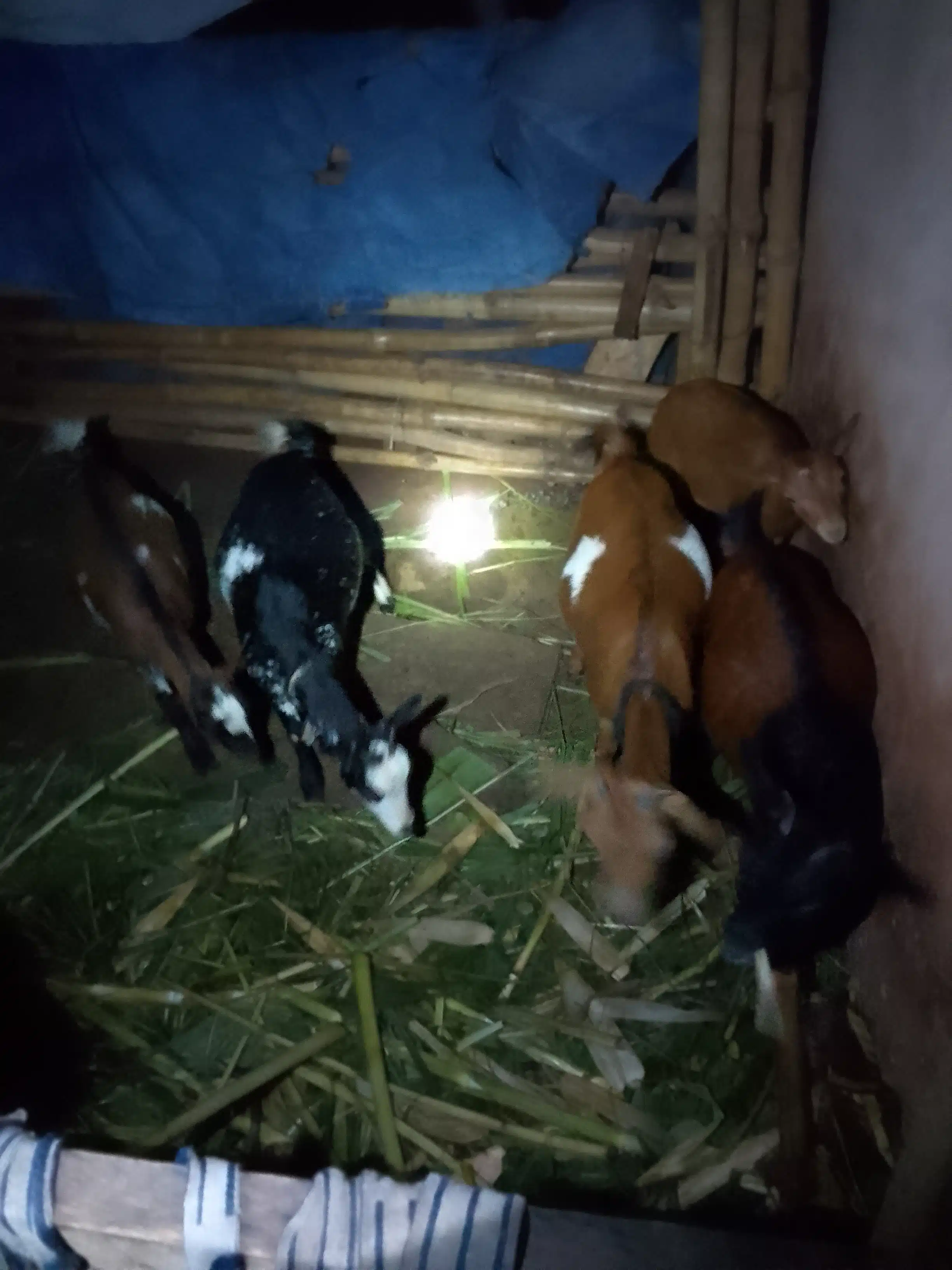
My 5 female goats
Soybeans hull is a good energy source for ruminants. It can replace or supplement other more expensive energy sources like maize, millet etc. Below are some important facts about soyhulls:

1. Depending upon price and availability, soybeans hull can replace some (most or all) of the hay or grain in the diets of sheep, goats, and other livestock.
2. It is very good to feed soyhulls to ruminants that are consuming low to moderate quality forages. It will help boost their growth rate by as much as 80%.
3. for small ruminants (sheep and goats), there are two primary uses of soyhulls:
i. as an energy supplement for animals consuming low to moderate quality forage. This is the most common use for soyhulls. In this case it can replace corn as an energy source on a one-to-one basis (1kg corn can be replaced by 1kg soyhull).
ii. as a replacement for some (most or all) of the hay or grain in the diet of ewes, does, lambs, and/or kids. 1kg soyhull can replace 1.4kg hay.
In some countries, grass-fed livestocks commands higher prices than grain-fed ones. Feeding soyhulls with some grass will still maintain the grass-fed status of the livestock. This is desirable because soyhull tend to be cheaper and is more nutritious than grass. Also, it would be easier for an ewe to raise 3 kids with soyhull than with pasture.
Note that it is not good to overfeed grains to ruminants to avoid digestive problems like acidiosis. For more information on the safe amount of grain to feed, read ….Max. Amount of Grain in Goat Feed.
5. On as-fed basis (i.e. the hull is dry but it still contains a little moisture, but so little that it won’t cause spoilage. It is not 100% dry) soybean hulls contains:
Crude protein: 11-12%
Total Digestible Nutrients: 65-70%
Crude fiber: 35-40%
Calcium: 0.49%
Phosphorus: 0.21%
6. Soybean hulls may contain the enzyme urease, which causes the rapid breakdown of urea. Use caution when you feed soybean hulls with feeds containing urea as it may cause sudden death or lead to excessive ammonia excretion into the environment, and poor N utilisation.
The urease can be destroyed in the milling or heating process and usually is when the hulls are used in a mixed feed.
Copper toxicity
Soybean hull is high in copper (about 17 ppm). Sheep can tolerate only 15 ppm copper in their feed and this tolerance is only possible when the feed contains normal levels of molybdenum and sulphur. So it is advisable to limit soybean hull in sheep feed. Where the risk of copper toxicity occurs, increase the level of molybdenum and sulphur in the diet to prevent problems.
Mycotoxins
When the weather is both warm and humid at the time of soybean harvest, fungi development may result in the production of mycotoxins. Among them, zearalenone in particular may be concentrated in the hulls.
Ref
https://www.sheepandgoat.com/soyhulls
Recent Posts
8 Proven Ways to Stop Chickens from Eating Their Eggs
Egg eating is a frustrating habit that can spread quickly among layers once it begins.… Read More
Food Dehydration Business 💥
Do you know you don’t need farmland to start a profitable food business? 1. Just… Read More
Ginger Production in Nigeria: Value Addition is the Key
God has truly blessed our country and continent. Did you know that Nigeria is the… Read More
Aquaponics: Grow Fish, Earthworms and Veggies with 90% Less Water
Have you heard of aquaponics before? It is a modern farming system that combines fish… Read More
How to Revive Cucumber Seedlings that are Dark Green has Thick Leaves and Stems that easily break
How do you tackle a cucumber seedlings that is dark green, has thick leaves and… Read More
Milk fever in Ruminants: Causes, Treatment and Prevention
Do you have pregnant sheep, goats or cows that fall sick before or after delivery?… Read More
Leave a Comment